Thunder Bay HIFIS · Reaching Home Initiative
Homeless Individuals & Families
Information System
Thunder Bay HIFIS is the local Homeless Individuals and Families Information System for homelessness data, coordinated access, and community dashboards in Thunder Bay, Ontario.
A coordinated, evidence-based response to homelessness in Thunder Bay, connecting service providers, data, and community partners to improve outcomes.
What We Do
Thunder Bay HIFIS: A Unified Homelessness Management Information System
HIFIS is a web-enabled Homelessness Management Information System (HMIS) that allows multiple service providers within Thunder Bay to implement coordinated access, document client-level service transactions and plans across a broad range of organizations.
Coordinated Access
Multiple service providers share a unified platform to ensure clients receive seamless, consistent support across the homelessness response system.
Data-Driven Decisions
Real-time dashboards and reports give stakeholders the insights they need to allocate resources and measure outcomes effectively.
View Dashboards →Community Partnerships
We work alongside the Lakehead Social Planning Council, Epsilon Data Intelligence inc, TBIFC, Connected Minds, CHAT, and frontline service providers across Thunder Bay.
Meet the Team →Organizations Using HIFIS
Frontline organizations across Thunder Bay sharing data to improve outcomes for people experiencing homelessness
Our Mission
Strengthening the Response to Homelessness
Our team is a collective of dedicated academics, experienced community partners, and passionate students. This collaborative approach brings together diverse perspectives and expertise, strengthening our ability to address homelessness effectively.
Lakehead Social Planning Council's leadership and system-planning expertise, combined with Epsilon Data Intelligence inc's technical management and strong academic partnerships, create one of the most robust homelessness data infrastructures in Thunder Bay.
Partnership Focus
Together, we are strengthening data quality, improving system alignment, and advancing a collective impact approach that supports better outcomes for people experiencing homelessness in Thunder Bay.

Get In Touch
Have questions about HIFIS data or want to request access? We'd love to hear from you.
Who We Are
About Thunder Bay HIFIS
A collaborative initiative bringing together academics, community partners, and service providers in Thunder Bay.
The People
Meet Our Team
Our team is a collective of dedicated academics, experienced community partners, and passionate students. This collaborative approach brings together diverse perspectives and expertise, strengthening our ability to address homelessness effectively.

Rebecca Schiff
Project Lead · Deputy Provost, University of Lethbridge
Dr. Rebecca Schiff is a trans-disciplinary university scholar and administrator, working across public health, Indigenous health, psychology, nursing, education, occupational therapy, and social work.

Vijay Mago
Project Lead · Associate Professor, Faculty of Health, York University
Dr. Vijay Mago is an Associate Professor and Chair in the School of Health Policy & Management at York University, specializing in health informatics and analytics.

Dr. Frederic Fu
Postdoctoral Fellow · York University
Dr. Frederic Fu is a researcher at the School of Health Policy and Management at York University, focusing on neurological and mental health risks among people experiencing homelessness.

Russell Frost
HIFIS Community Coordinator
Russell Frost is the current lead HIFIS community coordinator and a master's student in Electrical and Computer Engineering, with a passion for programming, statistics, databases, and neural networks.

Aashvi Gupta
Research Assistant · HIFIS · Lakehead University
Aashvi Gupta is a research assistant with experience in mental health, addictions, and community-based research in Thunder Bay.
The System
What Is HIFIS?
HIFIS (Homeless Individuals and Families Information System) is a web-enabled HMIS that allows multiple service providers within Thunder Bay to implement coordinated access and document client-level service transactions across a broad range of organizations.
It operates under Reaching Home directives from the Government of Canada and supports a coordinated, evidence-based approach to ending homelessness in the region.
Coordinated Access: Multiple service providers share a unified client-level data system.
Evidence-Based Practice: Data informs decision-making and resource allocation across the system.
System-Wide Performance: Consistent data collection enables rigorous community-wide measurement.
Strong Governance: High-quality data governance through Lakehead Social Planning Council leadership and Epsilon Data Intelligence inc's technical management.
Community Entity
The Lakehead Social Planning Council
The Lakehead Social Planning Council, as the Community Entity for Reaching Home in Thunder Bay, uses federal funding to support the local management and operation of HIFIS, the central data system for the city's homelessness response. Through this role, Lakehead Social Planning Council provides overall leadership, coordination, and accountability for homelessness data across the region.
Lakehead Social Planning Council's leadership and system-planning expertise, combined with Epsilon Data Intelligence inc's technical management and strong academic partnerships, create one of the most robust homelessness data infrastructures in Thunder Bay.
Working alongside the Thunder Bay Indigenous Friendship Centre (TBIFC), the Coordinated Housing Access Table (CHAT), frontline service providers, and all levels of government, Lakehead Social Planning Council and Epsilon Data Intelligence inc help drive a coordinated and evidence-based response to homelessness.
Organizations Using HIFIS
Frontline organizations across Thunder Bay sharing data to improve outcomes for people experiencing homelessness
Data & Insights
Explore Our Dashboards
Interactive visualizations of homelessness data across Thunder Bay, updated regularly to support evidence-based decision making.
Available Dashboards
Thunder Bay HIFIS Interactive Dashboards
Use the buttons below to navigate between the three dashboards. Each is based on the Community Outcomes Report.
What are these numbers?
There are three dashboard pages based on the Community Outcomes Report:
-
Inflow/Outflow: The distinct count of clients by their most recent HIFIS status transition. Previously active clients may appear in inflow if their status changes to another active status (e.g. signing a new consent). Periods longer than 90 days can reduce accuracy, as inactive clients may be counted alongside current ones.
-
Historic Data: Inflow and outflow status transitions for the previous year. Clients with "Unknown" status are counted in outflow; "Housed" is not counted in outflow.
-
Demographic Snapshot: Distinct counts of clients identified in HIFIS over the selected time period.
Note: reports only account for each client's most recent interaction in the selected time period (to prevent duplicate counts). Data goes back to 2023; earlier date ranges will return zeros.
Glossary
Public Institution: Clients living in government-provided or government-funded facilities, including shelters, group homes, correctional facilities, or hospitals.
Chronically Homeless: Individuals who have been homeless for an extended period, typically more than 6 months (180 days).
Transitional: A temporary housing situation where clients are moving from homelessness toward more stable conditions, often via short-term transitional housing programs.
For further information see the HIFIS Data Dictionary provided by the Homelessness Learning Hub. Questions? Email hifis@lspc.ca.
Need Custom Data?
Researchers, policymakers, and community organizations can request access to aggregated HIFIS data for approved purposes.
Scholarship & Knowledge
Research
Advancing knowledge on homelessness through rigorous, community-informed research in Thunder Bay and the surrounding region.
Reports & Documents
Community Reports
Reports and planning documents produced by Thunder Bay HIFIS partners and published through the Lakehead Social Planning Council.
Reaching Home: Thunder Bay Community Plan 2024–2028
Thunder Bay's coordinated community plan for addressing homelessness under the federal Reaching Home program, outlining priorities, targets, and strategies for 2024–2028. Published by the Lakehead Social Planning Council, 2025.
Thunder Bay Point-in-Time Count 2024 Report
Full report on the 2024 community-led homelessness enumeration, co-led by Lakehead Social Planning Council and the Thunder Bay Indigenous Friendship Centre. Captures detailed demographics and the experiences of people experiencing homelessness across the city. Published by Lakehead Social Planning Council, 2025.
Thunder Bay 2024 PiT Count Infographic
A visual summary of key findings from the 2024 Point-in-Time Count, highlighting headline statistics on shelter use, encampments, and demographics across Thunder Bay. Published by Lakehead Social Planning Council, 2025.
HIFIS Report Thunder Bay 2023
Annual summary of HIFIS data from Thunder Bay, covering client demographics, service interactions, and system-wide outcomes across all participating organizations. Published by Lakehead Social Planning Council, 2024.
Selected Publications
Our Research in Print
Peer-reviewed publications from the Thunder Bay HIFIS team.

Encampments in Thunder Bay, Ontario: Characteristics, needs, and community-based approaches to reduce homelessness and encampments
Fu, P., Wilkinson, A., Mago, V., Krysowaty, B., & Schiff, R. (2026). Canadian Planning and Policy / Aménagement et politique au Canada, Planning for Home in Northern Canada Issue, 1–13.

Community-driven approaches to homelessness enumeration: insights from the 2024 Point-in-Time (PiT) Count in Thunder Bay, Canada
Fu, P., Wilkinson, A., Mago, V., Schiff, R., Fisher, A., Frost, R., Gregg, A., & Krysowaty, B. (2025). Journal of Social Distress and Homelessness, 1–13.
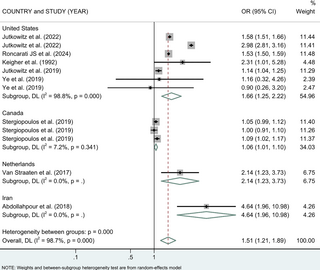
Associations between people experiencing homelessness (PEH) and neurodegenerative disorders (NDDs): A systematic review and meta-analysis
Fu, P., Mago, V., Schiff, R., & Krysowaty, B. (2024). PLOS ONE, 19(10), e0312117.
Interested in Collaborating?
We welcome research partnerships with academics, community organizations, and government bodies.
What's Happening
Activities & Updates
Stay up to date with events, training sessions, reports, and news from Thunder Bay HIFIS.
Recent Activities
Latest Updates
Thunder Bay HIFIS Transitions to Epsilon Data Intelligence inc
Thunder Bay HIFIS has transitioned its technical management to Epsilon Data Intelligence inc, marking an exciting new chapter in the growth of the local homelessness data system. We owe an enormous debt of gratitude to Lakehead University, whose years of dedicated support, technical expertise, and genuine commitment to community wellbeing helped build HIFIS into what it is today. The foundation they helped lay, in data quality, system governance, and academic partnership, continues to shape everything we do. We look forward to carrying that legacy forward alongside Epsilon Data Intelligence inc and Lakehead Social Planning Council.
HIFIS Members Attend CAEH Conference
From Oct. 28 to 30, representatives from the Thunder Bay HIFIS team attended the Canadian Alliance to End Homelessness Conference. Alongside colleagues from the Thunder Bay Indigenous Friendship Centre and Elevate NWO, Bonnie Krysowaty shared the story of the Encampment Elimination Endeavour in Thunder Bay during the winter of 2023–24, highlighting the integration of healthcare within housing initiatives and the power of culturally relevant, person-centred supports.
Planning Key to Tackling Homelessness, Says Expert
Frederic Fu, a postdoctoral fellow at York University's School of Health Policy and Management, explained that the goal of his research is to help governments make informed policies. "The target of this paper is to show the people who have the money, who have the power, who make the strategies... we want to show how the situation is and the significance of those people and eventually end homelessness." He adds that data needs to be front and centre to end the stigma.
Read ArticleLocal Organization Gets $1M More to Help Keep People Housed
An extra $1 million in federal funding went to the Lakehead Social Planning Council through the Reaching Home program. "Hopefully we'll be able to see some elimination of encampments in Thunder Bay with this extra funding," said Bonnie Krysowaty, program manager at the Lakehead Social Planning Council. Efforts include helping people catch up on rent and bills, hiring more outreach staff, and funding amenities for people in transitional housing.
Read Article'Collective Impact': Anti-Homelessness Advocacy Must Be Community-Wide
Social service organizations behind Thunder Bay's 2024 Point-in-Time Count called on the community to advocate for solutions. Bonnie Krysowaty and Annika Gregg of the Thunder Bay Indigenous Friendship Centre presented recommendations including investing in Indigenous-led housing, low-barrier sheltering, permanent supportive housing with embedded healthcare, and raising Ontario Works and ODSP payments.
Read ArticleNew Interactive Dashboards Released
Thunder Bay HIFIS launched a suite of brand new interactive dashboards, making homelessness data more accessible to community partners, researchers, and policymakers across the region.
HIFIS User Training Sessions
Coordinated a series of training workshops for frontline service providers across Thunder Bay, building capacity for consistent and high-quality data entry into the HIFIS platform.
Expanded Partnership with TBIFC
Deepened our collaboration with the Thunder Bay Indigenous Friendship Centre, ensuring more culturally responsive data collection practices and representation of Indigenous clients in the system.
Annual Homelessness System Report
Released the annual report summarizing key trends in homelessness across Thunder Bay, presented to community partners and government stakeholders at the Coordinated Housing Access Table.
Presented at National HMIS Conference
Team members presented findings on coordinated access implementation in smaller urban and northern communities, sharing learnings from Thunder Bay with practitioners across Canada.
Get Involved
Interested in participating in research, attending training, or contributing to the homelessness response in Thunder Bay?
Stay Connected
For updates on new reports, dashboards, and training opportunities.
Reach Out
Contact Us
We'd love to hear from you, whether you have a general inquiry or a data request.
Get in Touch
Whether you're a researcher, service provider, government partner, or community member, we're here to help with questions about HIFIS data and operations. For data requests, see below.
General Inquiry
* Required field. Responses may take up to one week.
For Researchers & Partners
HIFIS Data Request Form
Approved researchers and community organizations may request access to aggregated HIFIS data. All requests are reviewed for alignment with privacy standards and ethical guidelines.
* Please note: responses may take up to one week.